
Australian Toll Road News & Updates
What does a toll pay for? What happens when the original construction debt is cleared? And what have the courts actually decided about vehicle-use charges?
This page brings together Robin Hood Tech updates, information about the Queensland toll-road petition and stories from Australia’s road history.
Read the background, follow the source links and explore the difference between established facts, proposals for change and legal questions that remain to be examined.
Queensland Toll Road Petition 4586-26
“Remove Profit-Driven Tolling from Queensland Roads” asks the Queensland Parliament to review tolling and enforcement legislation affecting essential commuter roads, including the Gateway Motorway.
The petition raises concerns about long-term tolling, charges that may extend beyond genuine cost recovery and the practical alternatives available to motorists.
It asks Parliament to consider staged removal or reform of tolls on essential commuter routes. It also requests fair, transparent and proportionate civil recovery processes rather than prosecution or punitive enforcement where the underlying charge is tax-like in nature.
These are the petitioners’ requests, not findings that a court has made.
The petition specifies Queensland residents as eligible participants. Visit the official Queensland Parliament page to read the complete wording and check its current status.
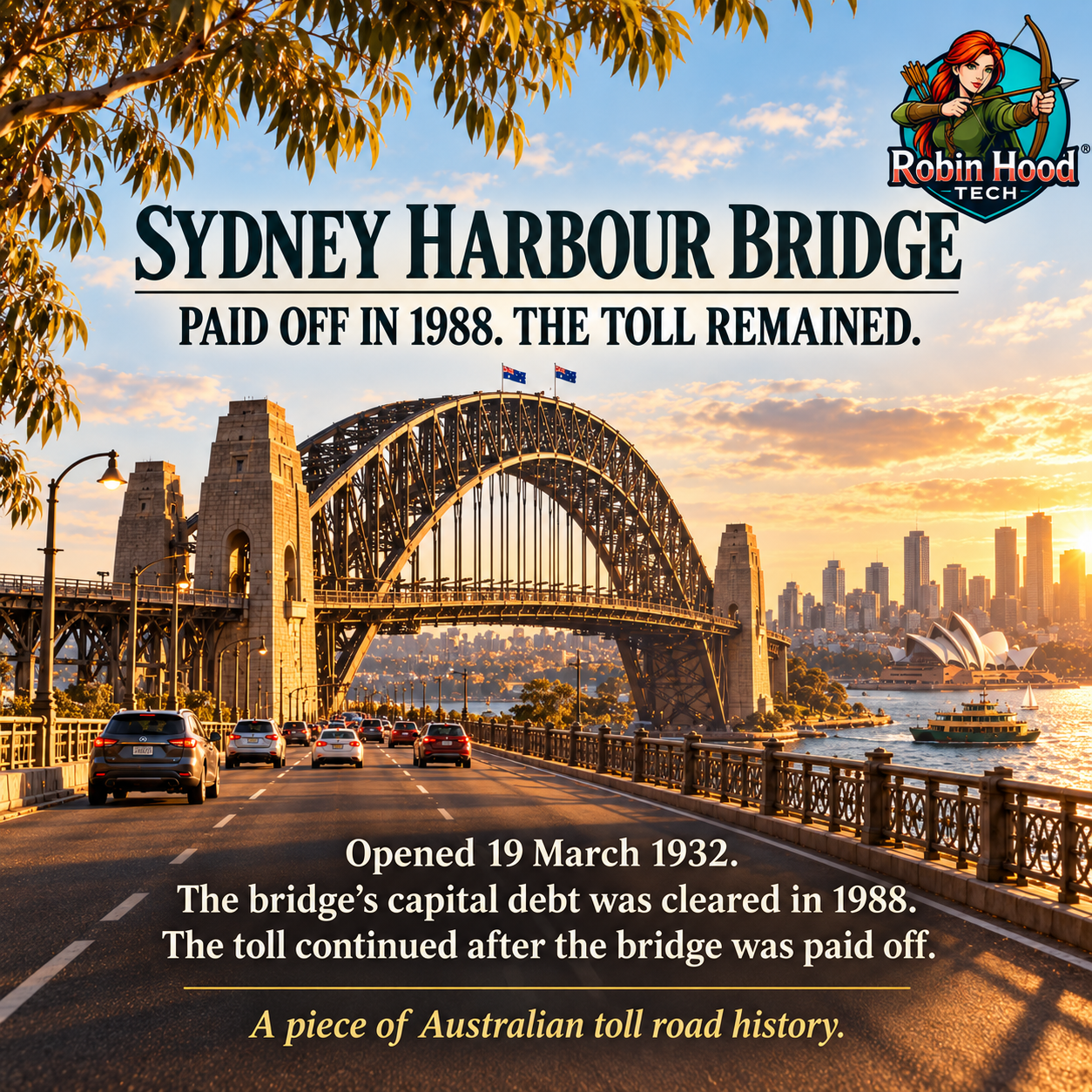
Sydney Harbour Bridge: Paid Off in 1988, but the Toll Continued
The Sydney Harbour Bridge opened on 19 March 1932. More than half a century later, in 1988, its construction debt was finally paid off, according to the National Museum of Australia.
But repayment of that debt did not end toll collection.
The State Library of NSW records that tolls were increased to help pay for the Sydney Harbour Tunnel and the ongoing cost of maintaining the bridge. The purpose of the charge had extended beyond repaying the original construction debt.
That distinction matters when looking at toll-road history. Paying for construction, maintaining an existing crossing and funding another transport project are different uses of revenue.
The Harbour Bridge story is a starting point for understanding how those funding arrangements can change over time.
Vanderstock and Section 90: What the High Court Decided
In Vanderstock v Victoria [2023] HCA 30, the High Court considered Victoria’s distance-based charge on zero and low-emission vehicles.
On 18 October 2023, the Court ruled by majority that the charging provision was invalid because it imposed a duty of excise. Section 90 of the Australian Constitution reserves the power to impose duties of customs and excise to the Commonwealth.
The Court also overturned an earlier decision that had excluded taxes on the consumption of goods from the definition of excise. The judgment therefore addressed how taxes on the use of goods can fall within section 90.
The decision did not declare all Australian road tolls unlawful. It concerned a particular Victorian vehicle charge. Applying its reasoning to a different charge requires examination of that charge and its legal arrangements.
The High Court’s published summary is a useful starting point. It explains the dispute and the outcome, while the full judgment contains the Court’s detailed reasons.
Receive Robin Hood Tech Updates
Follow new articles, project announcements and updates from Robin Hood Tech.
Use our email signup page to stay connected. For questions about something published here, or to flag a factual error, contact us with the page address and the information you would like us to review.
This website provides general information, not individual legal advice. Historical articles describe the periods identified. For an individual toll notice or legal proceeding, check the relevant documents and deadlines and obtain advice about your circumstances.